






Kicked out by PayPal, Musk aims to make a comeback in the crypto market
 Core Viewpoint

 Cashtags generated a trading volume of 1 billion dollars just a few days after its launch, marking a strong start for Musk's super app strategy. For the cryptocurrency market, X's layout may be one of the most anticipated sources of retail growth after the meme coin craze subsides.
Author: Chloe, ChainCatcher
X officially launched the Smart Cashtags feature in April 2026, quickly generating a strong response in the market. According to X's product head Nikita Bier, the feature drove approximately $1 billion in trading volume globally within just a few days of its launch, based on data from the platform's trading pilot phase.
The core functionality of Smart Cashtags allows users to simply click on stock or cryptocurrency codes (such as BTC, BTC, BTC, TSLA) in posts to view real-time price charts and related discussions without leaving the app. Unlike the old Cashtags, which were merely static links, the new feature supports smart contract address searches, allowing users to directly paste the full contract address of tokens on the Solana chain, which the system automatically resolves to the corresponding asset.
Currently, this feature has been launched among iPhone users in the United States and Canada, and is gradually expanding to the global iOS version, with Android and web versions in development. In the Canadian market, X has partnered with local well-known online brokerage Wealthsimple, allowing users to directly enter the Wealthsimple app to complete stock, ETF, or cryptocurrency trades by clicking on Cashtags, creating a closed experience from "seeing information" to "placing orders." However, all transactions and account activities still occur entirely on the Wealthsimple platform, and users' personal account information will not be sent back to X.
Bier emphasized that Cashtags are just the first step; X's vision goes beyond displaying charts to making valuable content more actionable. He pointed out, "Every day, billions of dollars in funds are allocated based on what people read on the Timeline." He accurately highlighted the true intention behind X's push for this feature: when the distance between social discussions and trading actions is minimized, the platform itself has the opportunity to become an important node of market liquidity.
The Rise of Social Trading: X Seizes a New Battlefield for "Monetizing Attention"
Social trading is becoming the next major consumer application wave in the cryptocurrency industry.
According to a research report by Galaxy Research, the cryptocurrency industry has developed three main "attention financialization" native tools over the past few years, each corresponding to different types of market advantages:
First, on-chain tokens (including meme coins), which financialize "culture and viral dissemination." From NFTs transforming cultural status into tradable assets to meme coins allowing anyone to issue tokens based on trends, jokes, or meme topics, along with platforms like Pump.fun reducing the cost of issuing tokens to nearly zero, on-chain tokens reward responsiveness and sensitivity to network culture; those who can capture the next viral meme first can profit.
Second, perpetual contracts (Perps), which financialize "directional views and leverage." Perpetual contract DEXs like Hyperliquid allow traders to express bullish or bearish views on any asset using leverage. It rewards judgment of market trends and risk management abilities; those who can predict the right direction and manage their positions well can amplify their profits.
Third, prediction markets, which financialize "information advantages and judgment." Prediction markets like Polymarket allow users to bet on real-world events. It rewards the ability to gather, interpret, and judge information; those who possess more accurate information or insights can profit when event outcomes are revealed.
Together, these three cover nearly all ways for native online traders to express their views. However, the actual user experience has long been highly fragmented, requiring users to constantly switch between multiple blockchains, terminals, Telegram bots, wallet trackers, and X dynamics. This workflow is effective for seasoned players but presents a significant barrier for average users. Se Yong Park, founder of cross-chain trading application fomo, stated that the number of people willing to set up advanced trading terminals is capped, but many more are willing to download a social app. "When interface friction is eliminated, the user base that social trading can attract far exceeds that of traditional crypto-native groups."
Therefore, X's entry into this space has clear advantages, with 500 million to 600 million global monthly active users, and it is already a core venue for market discussions within the crypto community. The X product team has also recruited several veteran crypto UX experts, including Benji Taylor, former design lead at Base and chief product officer at Aave Labs, as well as Nikita Bier himself, who is an advisor to the Solana Foundation. This has led to widespread market expectations that Solana will be one of the biggest beneficiary chains in X's financialization layout.
The Next Step for X Money: Entering the Crypto Market Through Payments
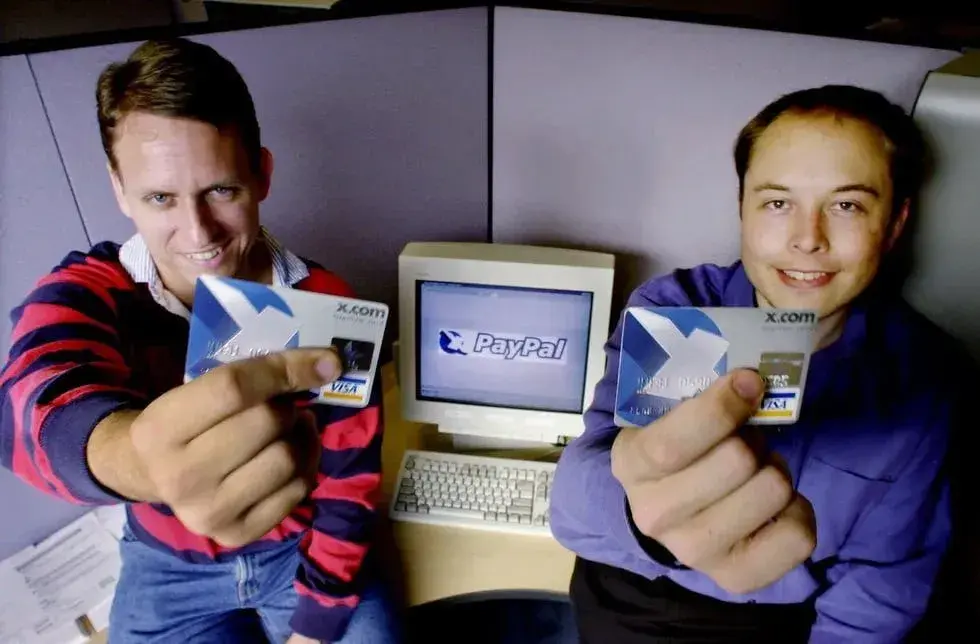
The success of Cashtags is just the prologue to Musk's "Everything App" blueprint. The real key lies in the upcoming full launch of X Money, which is Musk's weapon as he returns to the financial payment battlefield after 24 years. In 1999, the X.com he co-founded merged with Confinity to create PayPal, but he was soon ousted from the CEO position in a boardroom coup, with Peter Thiel taking over. Now, he returns with greater ambition.
According to Mizuho analyst Dan Dolev, X Money aims to integrate digital wallet and payment services within the X platform, benchmarking against the successful model of China's WeChat Pay and Alipay, which combine "communication + commerce." Dolev has thus downgraded PayPal's rating from bullish to neutral and lowered the target price from $60 to $50, citing that "X Money has the potential to disrupt the U.S. payment market."
The current beta version of X Money offers the following services: a deposit account hosted by X providing a 6% annual percentage yield (APY), 3% cash back on certain purchases, support for direct payroll deposits, wire transfers, checks, ATM withdrawals, cash deposits, and in-app P2P transfers. Deposits are held by Cross River Bank, known for its partnerships with fintech companies like Affirm, and are insured by the FDIC up to $250,000 per person. X has also established a partnership with Visa, while Mastercard may join later through "Mastercard Send."
For the crypto market, what is truly worth noting is whether X Money will further integrate cryptocurrency trading and stablecoin settlements. Dolev mentioned in his report that X Money may expand transaction volume through stablecoins in the future; Galaxy Research also speculated that based on the fact that the U.S. has obtained fiat payment licenses in over 40 states, users can expect to transfer directly through X, with the most natural implementation being on-chain stablecoins, which settle much faster than traditional fiat systems.
If Musk's envisioned script unfolds, X will not just be a payment tool but will become a "super financial social app" that integrates social, content, payment, trading, and crypto assets all within a single interface. For the current crypto market, which is experiencing a continued cooling of liquidity and a noticeable decline in the meme coin craze since the $TRUMP era, X may have the opportunity to inject a new wave of retail funds and attention into the entire industry.
Regulatory Issues Abound: What Costs Will Musk's Ambition Entail?
However, the ambition of a super app does not come without costs. Recently, U.S. Democratic Senator Elizabeth Warren sent a letter to Musk, raising serious concerns about the launch plan for X Money.
Warren's first major concern is the promised 6% APY from X Money. Against the backdrop of the federal benchmark interest rate being maintained at 3.5% to 3.75%, this yield is significantly higher than the national average, and even comparable to or higher than the returns of U.S. money market funds. Xiang Zheng, an assistant professor of finance at the University of Connecticut, also stated that maintaining such high yields is extremely challenging and may not be sustainable in the long term. Warren bluntly stated that it is currently unclear how X Money intends to support such a yield through "high-risk investments, invasive data monetization operations, or gimmicks."
The second concern focuses on Cross River Bank, which X Money plans to partner with. Warren pointed out that Cross River Bank has already been a "repeat offender," having faced enforcement actions from the Federal Deposit Insurance Corporation (FDIC) in both 2018 and 2023 regarding its lending practices and unfair competition behavior. She demanded that Musk submit a complete plan for X Money along with potential risk details within a specified timeframe.
Additionally, the legal loopholes in the "GENIUS Act" have also become a point of contention. The market currently questions whether this act creates dubious exemption paths for private enterprises like X, allowing non-bank entities to issue stablecoins without traditional financial regulation and insurance mechanisms. Under the current framework, stablecoin deposits are not directly insured by the FDIC, and FDIC Chairman Travis Hill has stated that allowing stablecoin companies to provide "penetrative insurance" to end users is inconsistent with existing regulatory frameworks. This means that if X Money were to experience a financial crisis, users' stablecoin assets might not receive government relief.
In addition to regulatory risks, social trading itself also carries certain concerns. Galaxy Research pointed out in its report that when trading activities are highly visible and just a step away from execution, the herd effect (Groupthink) can be significantly amplified; there is a natural information asymmetry between top traders and followers, with the latter likely becoming the "exit liquidity" for the former. A deeper issue is that social trading "entertains" financial operations; when speculative behavior feels like scrolling through TikTok, the psychological boundary between entertainment and financial risk becomes blurred.
Conclusion
Overall, the launch of Cashtags, which generated $1 billion in trading volume within just a few days, has provided a strong start for Musk's super app strategy. It proves that the combination of social platforms and financial functions can significantly boost liquidity and user engagement, and it confirms that social trading as "the next major consumer application trend in crypto" is not mere talk.
For the crypto market, X's layout signifies a rare potential opportunity: a platform that already has 500 to 600 million monthly active users and is a core venue for the crypto community. If it further integrates cryptocurrency trading and stablecoin settlements within X Money, it could inject a large number of new users and funds into the currently liquidity-starved crypto market. This may be one of the most anticipated sources of retail growth for the crypto industry after the meme coin craze has faded.
However, whether X can truly become "the first super financial social app in the Western world" still depends on its ability to find a balance between technological innovation, yield promises, and increasingly stringent legal regulations. The sustainability of the 6% APY, Cross River Bank's compliance record, and the stablecoin insurance loopholes under the GENIUS Act are all challenges that arise in line with Musk's ambitions.

 Risk warning